- Your cart is empty
- Continue Shopping
Free Shipping for orders over $150
Welcome to Tittan Peptides!
Free Shipping for orders over $150
Welcome to Tittan Peptides!

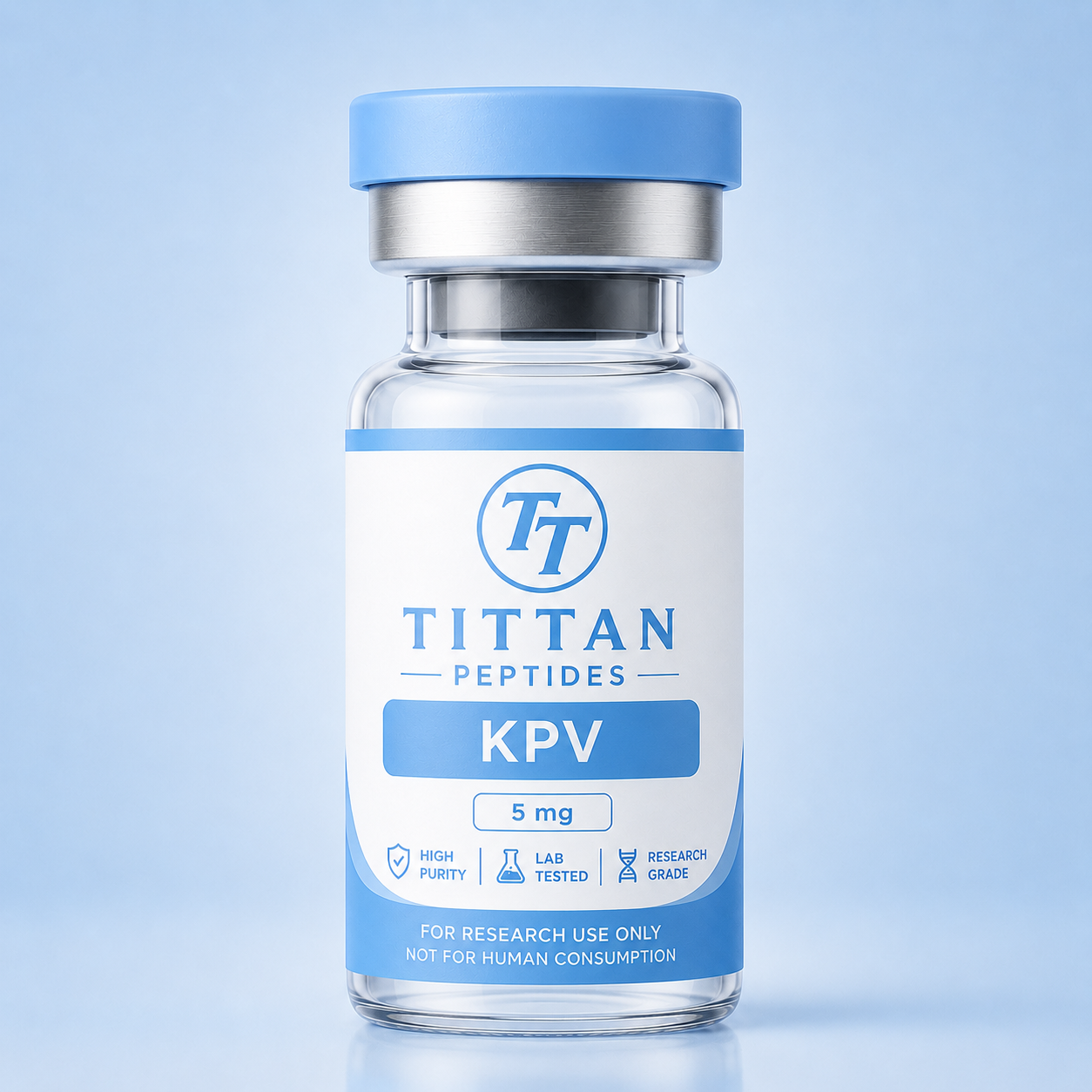
$39.00
KPV is a tripeptide (Lysine-Proline-Valine) derived from the C-terminal end of alpha-melanocyte-stimulating hormone (α-MSH). It is used exclusively for laboratory research. In addition, KPV is recognized for its strong anti-inflammatory and immunomodulatory properties. Unlike full-length α-MSH, it does not produce melanotropic effects such as skin darkening.
This lyophilized peptide is synthesized to ≥98% purity and verified by independent HPLC and mass spectrometry. Furthermore, KPV serves as a research tool for studying NF-κB pathway inhibition, cytokine modulation (TNF-α, IL-1β, IL-6), and neutrophil migration in in vitro and preclinical models. Unlike glucocorticoids, it works through non-steroidal mechanisms. Therefore, it is valuable for inflammation research without typical immunosuppressive side effects.
High Purity: ≥98% confirmed by third-party HPLC analysis
Non-Steroidal Anti-Inflammatory: No glucocorticoid receptor involvement
No Melanotropic Activity: Does not activate melanocortin-1 receptor (MC1R)
Stable Lyophilized Format: Allows easy reconstitution for cell culture or preclinical research
Research Use Only: Not for human consumption, clinical diagnosis, or veterinary application
Specification | Detail
Molecular Formula | C₁₆H₂₉N₅O₄
Molecular Weight | 355.43 g/mol
Sequence | H-Lys-Pro-Val-OH
Purity | ≥98% (HPLC)
Appearance | White lyophilized powder
Storage (Lyophilized) | -20°C, protected from light and moisture
Storage (Reconstituted) | 2–8°C for up to 7 days; aliquot for longer storage
Inflammatory Bowel Disease (IBD) Models: Colitis reduction through NF-κB suppression
Dermatological Research: Psoriasis, atopic dermatitis, and wound healing
Neuroinflammation: Microglial activation and cytokine regulation
Autoimmune Conditions: Rheumatoid arthritis and uveitis models
Parameter | Recommendation
Reconstitution | Sterile water or PBS (pH 7.0–7.4)
In Vitro Concentration | 1–100 µM
Preclinical Dosage (Rodent) | 25–200 µg/kg, intraperitoneal or subcutaneous
Cell Culture Stability | 24–48 hours in serum-containing media
Note: These values are for laboratory protocol design only and not for medical dosing.
KPV exerts its research-documented effects through several biological pathways. In particular, it directly inhibits NF-κB signaling by blocking p65 nuclear translocation. In addition, it suppresses key inflammatory cytokines such as TNF-α, IL-1β, IL-6, and IL-8.
Moreover, it modulates neutrophil activity by reducing chemotaxis and oxidative burst. Finally, it enhances epithelial barrier function by upregulating tight junction proteins in experimental models.
HPLC Purity Verification: ≥98% with full chromatographic trace
Mass Spectrometry Confirmation: Molecular weight validated
Endotoxin Testing: <1 EU/mg for cell culture compatibility
Batch Tracking: Certificate of Analysis available for each lot

Reviews
There are no reviews yet.